



Today, choosing a kitchen sink is no longer just about size or material. In modern kitchens, especially in hotels, restaurants, and high-traffic homes, the sink has evolved into a fully functional workspace, directly impacting hygiene, efficiency, and daily workflow.
Based on our years of experience as a الشركة المصنعة للصنبور, here are the key factors to consider when choosing a kitchen sink.
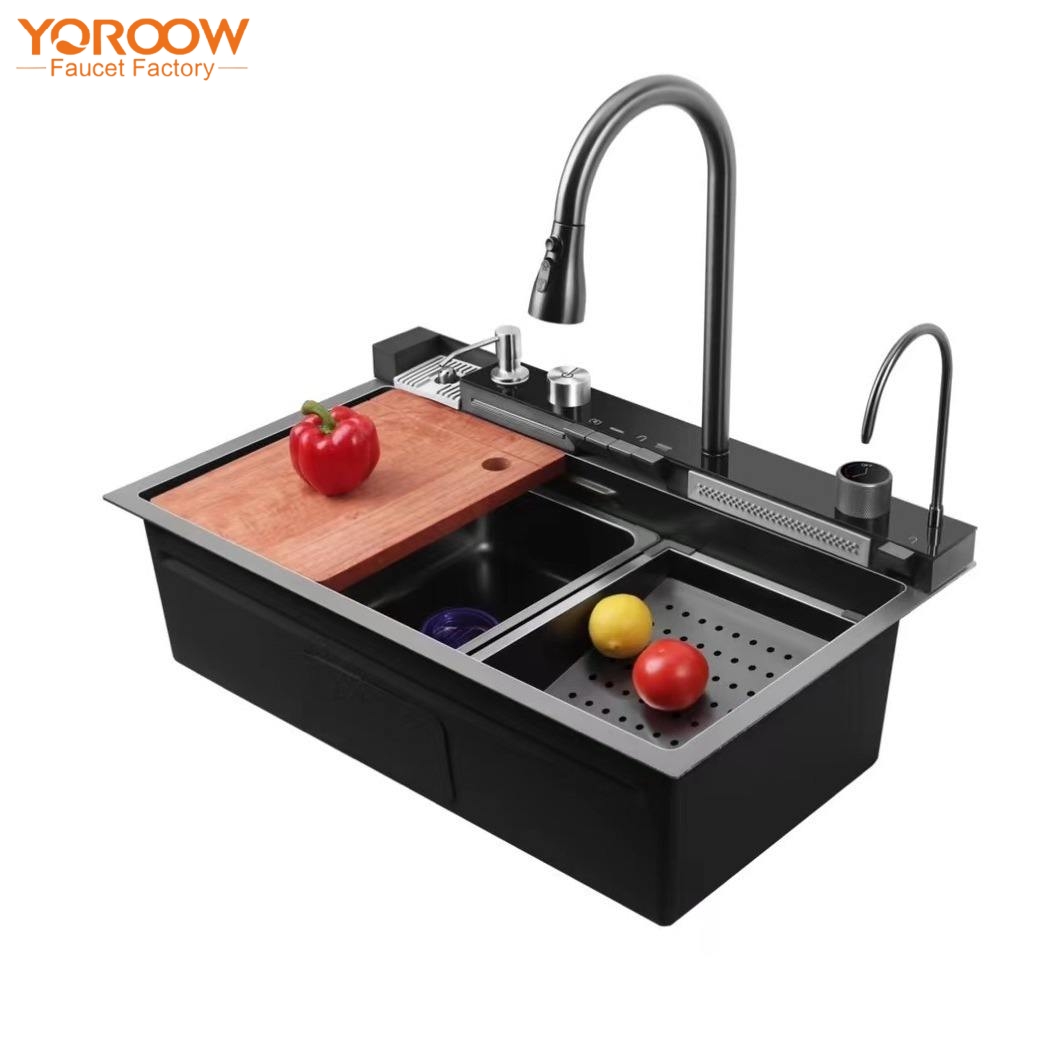
1. Drainage Efficiency is More Important Than Most People Realize
Poor drainage leads to water accumulation, food residue buildup, and increased cleaning time.
A well-designed sink should feature an optimized bottom structure, such as a nano-textured or honeycomb panel, to quickly and evenly guide water flow to the drain.
In practical use, enhanced drainage performance can significantly reduce water accumulation after washing vegetables or dishes.
2. Hygiene-Friendly Design is Uncompromising
Hygiene should be paramount in a kitchen where food is handled daily.
A seamless, one-piece sink design—without welded seams or gaps—prevents dirt and bacteria from accumulating in hidden areas, greatly speeding up daily cleaning.
This structure is particularly important for commercial kitchens and hotels, where hygiene inspections are frequent and standards are stringent.
3. Modern sinks should support multiple kitchen tasks.
As living standards improve, kitchen sinks are becoming increasingly versatile. Multifunctional sinks can significantly improve kitchen efficiency. Here are some key features to consider:
- Multi-mode water flow: Such as waterfall or rain shower sprays. A gentle, wide water flow can cover a large area, suitable for washing large quantities of food or the entire sink surface.
- Specialized spouts: For example, a cup-washing spout with a precise, high-pressure water flow can quickly wash cups, glasses, and small cutlery in seconds, saving time and effort.
- Retractable faucet: A retractable nozzle can cover every corner of the sink, making it easy to clean large appliances and hard-to-reach areas, while offering great flexibility.
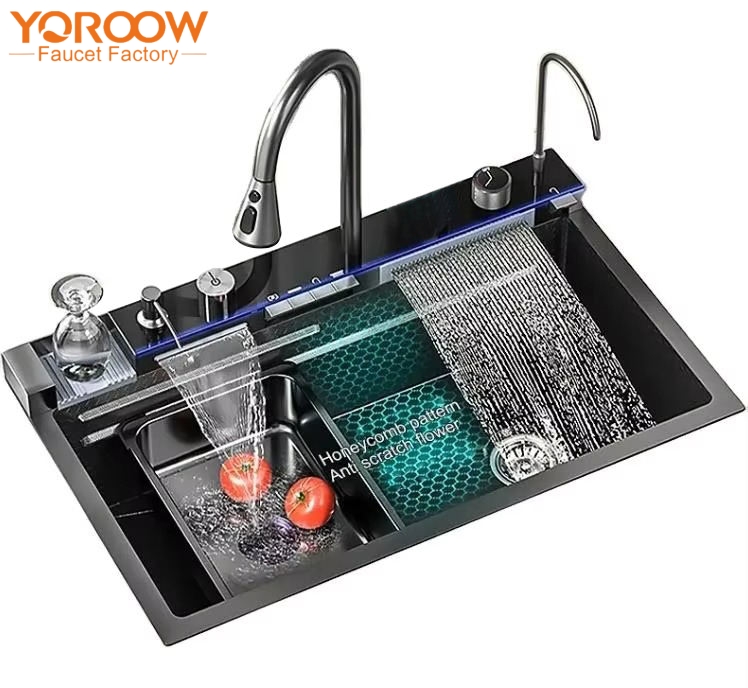
من Yoroow’s perspective, integrating these functions into a single stainless steel sink (rather than adding external accessories) results in a cleaner layout and greater long-term reliability. This all-in-one workstation sink design has proven particularly effective in commercial kitchens and high-frequency home kitchens.
4. Easy Installation, Saving Time and Labor Costs
Whether building a new house or replacing a sink, ease of installation is paramount.
When evaluating a sink, consider the following: Pre-drilled holes eliminate the need for secondary drilling, reducing the risk of countertop damage. Standard water connections (e.g., 1/2-inch connectors) ensure compatibility with most plumbing systems.
These details may seem minor, but they significantly reduce installation time and on-site work, crucial considerations for contractors and project managers.
5. Professional Kitchen Certification is Essential
For hotel and commercial use, compliance with professional kitchen hygiene standards is essential.
Certified sinks ensure regulatory compliance, streamline inspection processes, and reduce long-term operational risks. From a manufacturer’s perspective, certification is more than just a formality; it reflects consistent production quality and testing processes.
Final thoughts
A kitchen sink is more than just a fixture; it’s a tool used daily. Whether in a home kitchen or a professional setting, a suitable sink enhances cleanliness, workflow efficiency, and the overall user experience.
As a factory specializing in providing practical kitchen and faucet solutions for B2B projects, YOROOW adheres to the philosophy that well-designed, functionality-first products always have a longer lifespan than those that chase trends.
Choosing the right kitchen sink is ultimately an investment in long-term practicality, not just aesthetics.